
Shoulder Season in The Dalles, Oregon
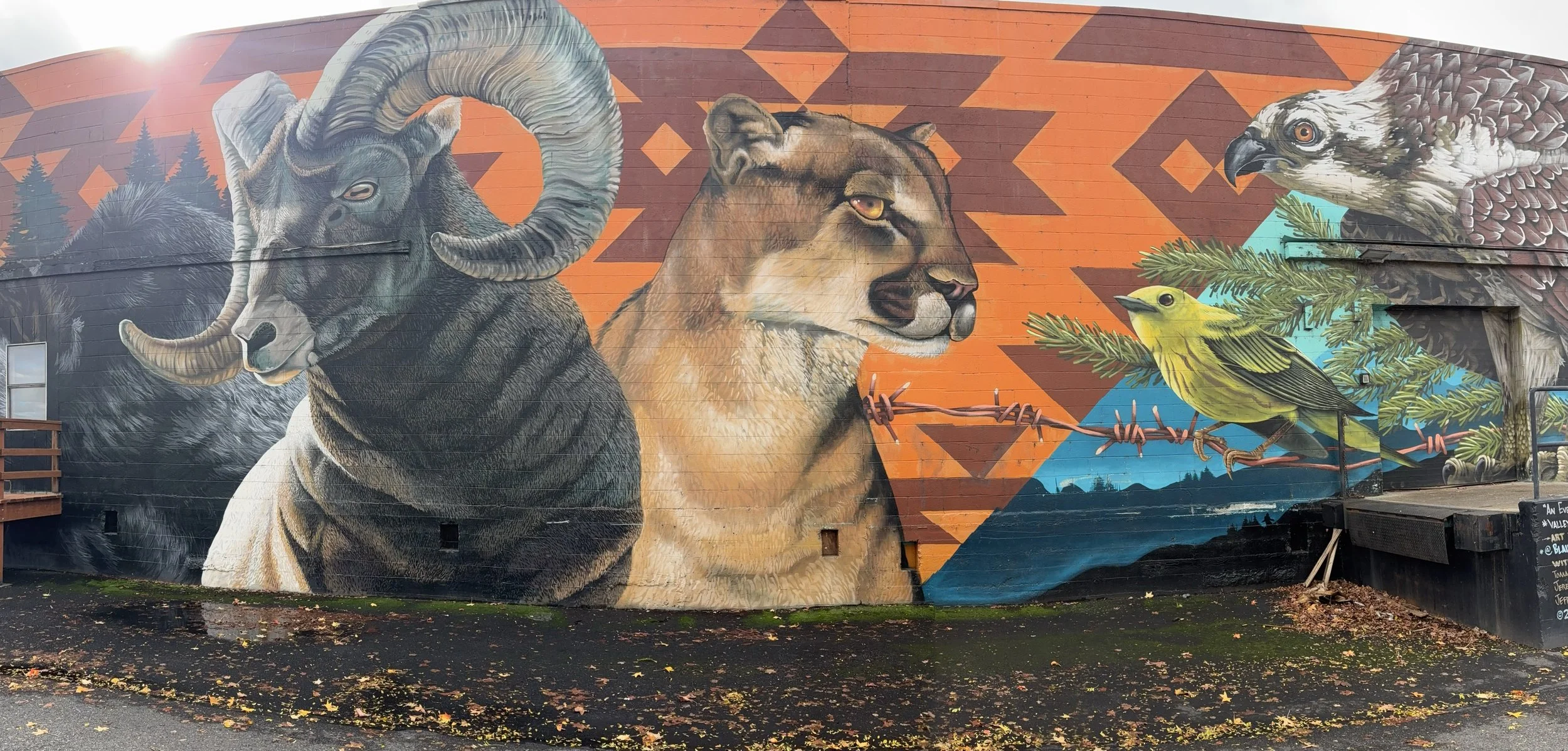
“An Eventful Gathering,” 320’ x 25’ mural in the Dalles. Photo Credit, Mindy Stern
Walking into the Columbia Gorge Discovery Center and Museum (CGDCM) in early November, my eyes were drawn down the long corridor, past fourteen towering wooden columns, and out, towards the view from the floor-to-ceiling glass wall. A bevy of quails, some young, some fully grown, scurried around the blackened ground. The Rowena Fire, which started just a few miles away in June 2025, scarred the landscape, revealing wildlife previously hidden in the brush. But now, the land is already showing signs of rebirth. After a two-and-a-half-month closure, the museum reopened, even debuting a new installation called A Sense of Place about how a sheep ranch in North Central Oregon pioneered sustainable ranching practices and became the wool source for the US Olympic teams’ Made in America uniforms.
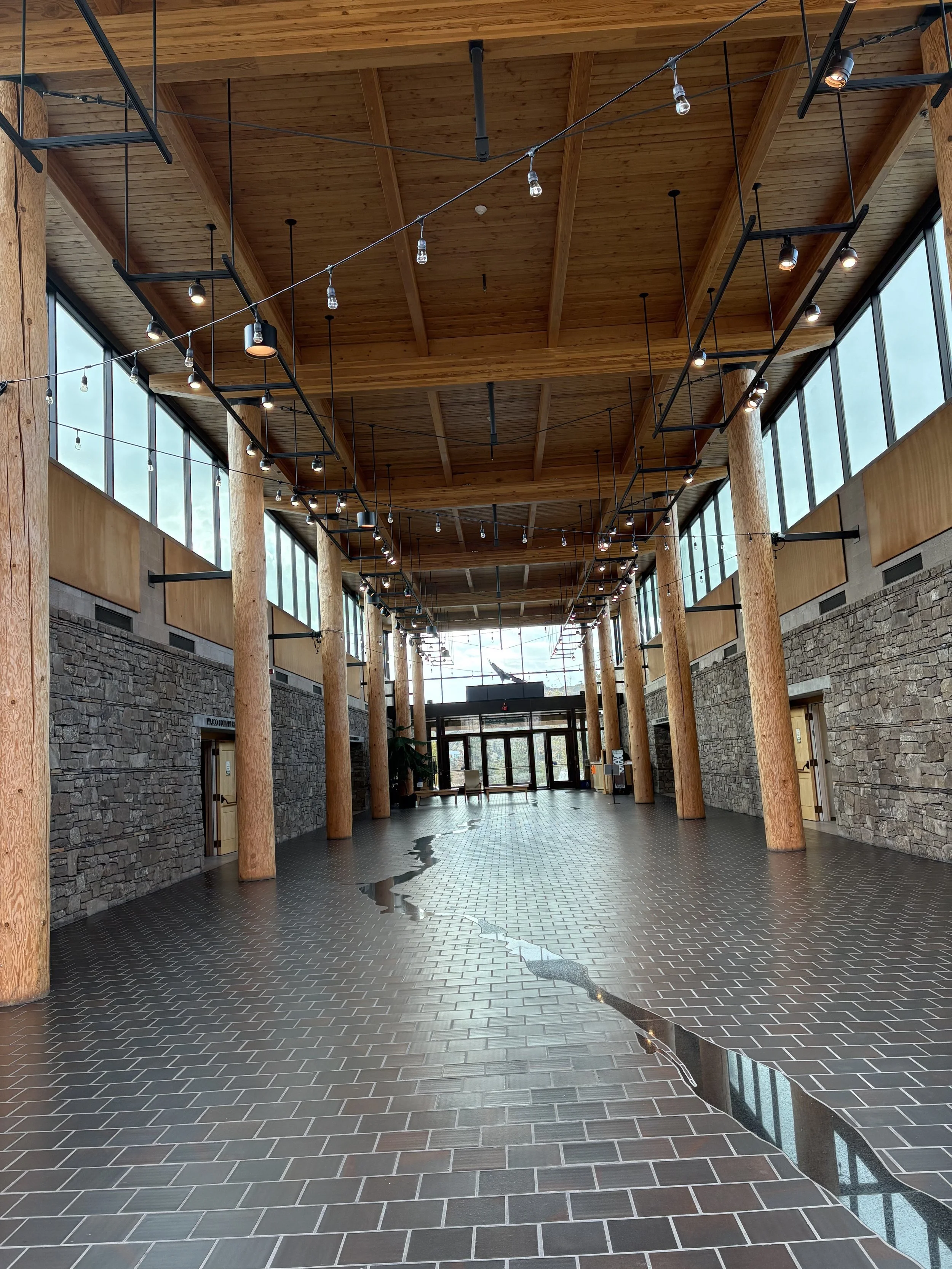
Follow the river to the windows at the Columbia Gorge Discovery Center & Museum. Photo Credit, Mindy Stern
The CGDCM is an interpretive center, a history museum, an archive of historical documents, a regional photo collection of over 9,000 images, and a fabulous place to visit any time of year. In shoulder season, September to November, the summer crowds and heat dissipate, fall foliage is on display, and the 54-acre site connects to the family-friendly, 6 ½ mile Dalles Riverfont Trail. There are so many reasons to plan a visit to the Dalles (rhymes with pals).
The state of Oregon has 29 officially designated scenic highways. On the 70-mile, Historic Oregon Route 30, you’ll see waterfalls, sheer rock cliffs, views of the Columbia River, and marvel at stone guardrails and retaining walls constructed between 1913-22. Drive from Mosier to the western edge of the Dalles, near the CGDCM. From there, a standard highway, I-84 takes you past Google’s controversial data center, and into the city center where more delights await.
Are you hungry? Stop at the 6th Street Station Food Cart Pod (closed Monday & Tuesday). On the day I visited, six trucks offered Wings, Mexican, Middle Eastern, Thai, Indian foods, and Boba. Clustered on the edge of a strip mall, this is The Dalles’ first venture into food carts, offering entrepreneurs a chance to try out their concepts without the heavy financial investment that brick and mortar restaurants require.
In summer 2022, an effort to revitalize The Dalles’ downtown launched MuralFest. Calling themselves “The Wall Dogs,” civically-minded volunteers and artists completed 15 vibrant murals over a five-day period, celebrating the city’s history and culture. It worked! Walking or driving around the downtown core, these paintings draw attention to the city’s late 1800s and early 1900s buildings.
One of those historic buildings, the 1910 Colonial-style Elks Temple is now home to another gem – the National Neon Sign Museum.
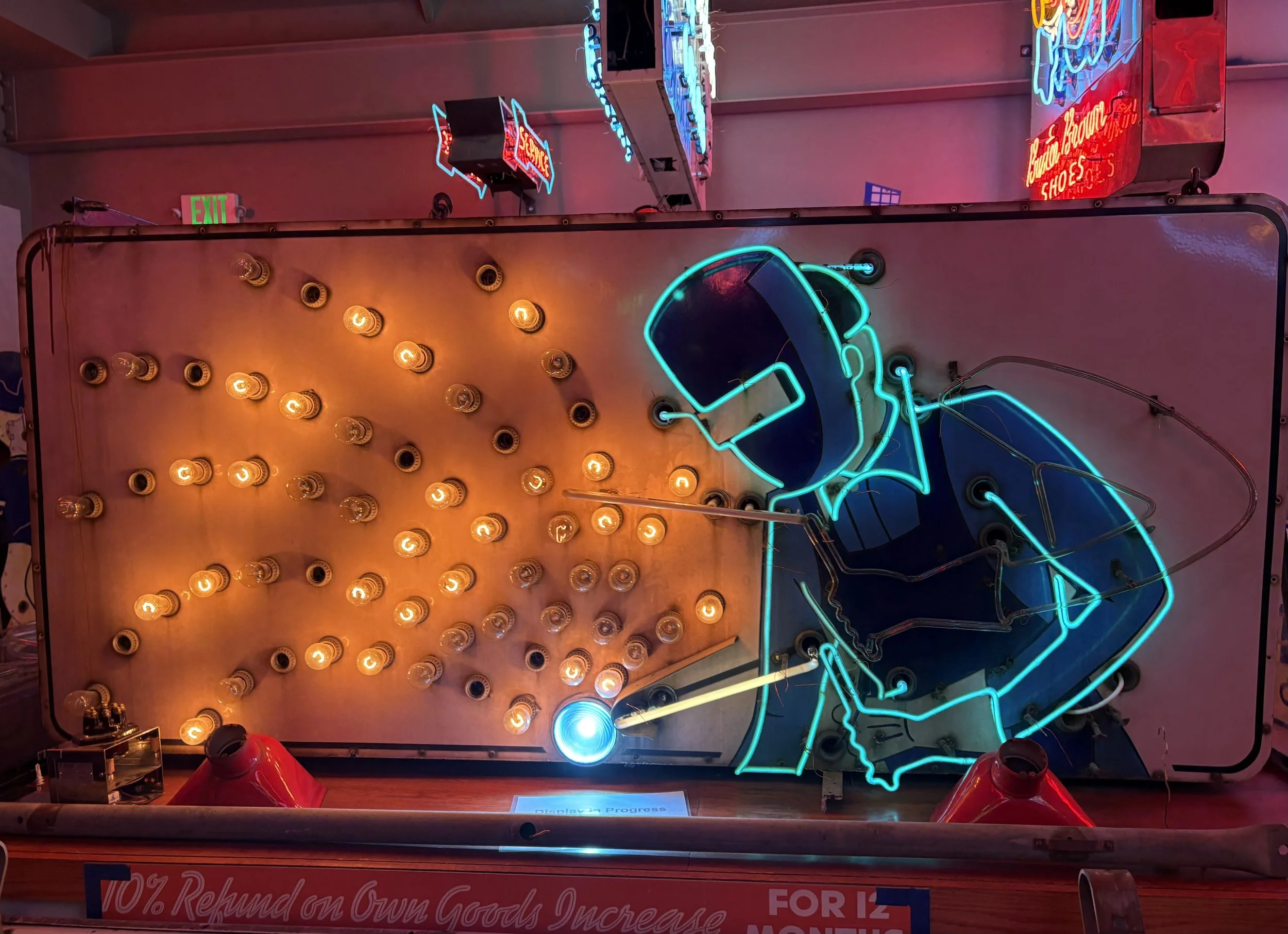
Welding Sign at the National Neon Museum. Photo Credit, Mindy Stern
David A. Benko, the museum’s director, spent 38 years building enormous neon signs for businesses like McMenamins. He also specialized in restoring theater signs. He’s an expert on everything neon – its history, applications, rise, fall, and rise again. I learned that neon’s first big boom was in the 1920s, with a golden age in the 30s and 40s. During WWII, blackout regulations ordered windows to go dark, and neon signs were destroyed so their metal components could be repurposed to build bombs and motor vehicles for the war effort. Meanwhile, technology evolved, making plastic signs with fluorescent lights popular after the war. Then, LED lights emerged in the 1960s. Now, neon is cool again, and old ones are coveted by collectors.
This museum is chock full of Americana objects both aesthetically pleasing, whimsical, and of historical significance. Almost all of the signs made by Georges Claude, the Frenchman who invented neon lighting, were destroyed during the scrapping efforts. But here in The Dalles, you can see a large, original Claude creation. This place is also a special treat for children and the young at heart, thanks to a collection of vintage carousel horses. Although not directly connected to neon, carousels were popular in the same era. In 2023, Benko acquired the entire Jantzen Beach Carousel, once the centerpiece of an Oregon amusement park which closed in 1970. The carousel was first moved to a shopping center, which also closed, then kept in storage for a long time. After being listed as “endangered” by the Architectural Heritage Center in 2012, a nonprofit called Restore Oregon searched for years for an appropriate home. Now, it’s being lovingly restored by Benko and a team of volunteers, and it fits beautifully in the museum’s large space.
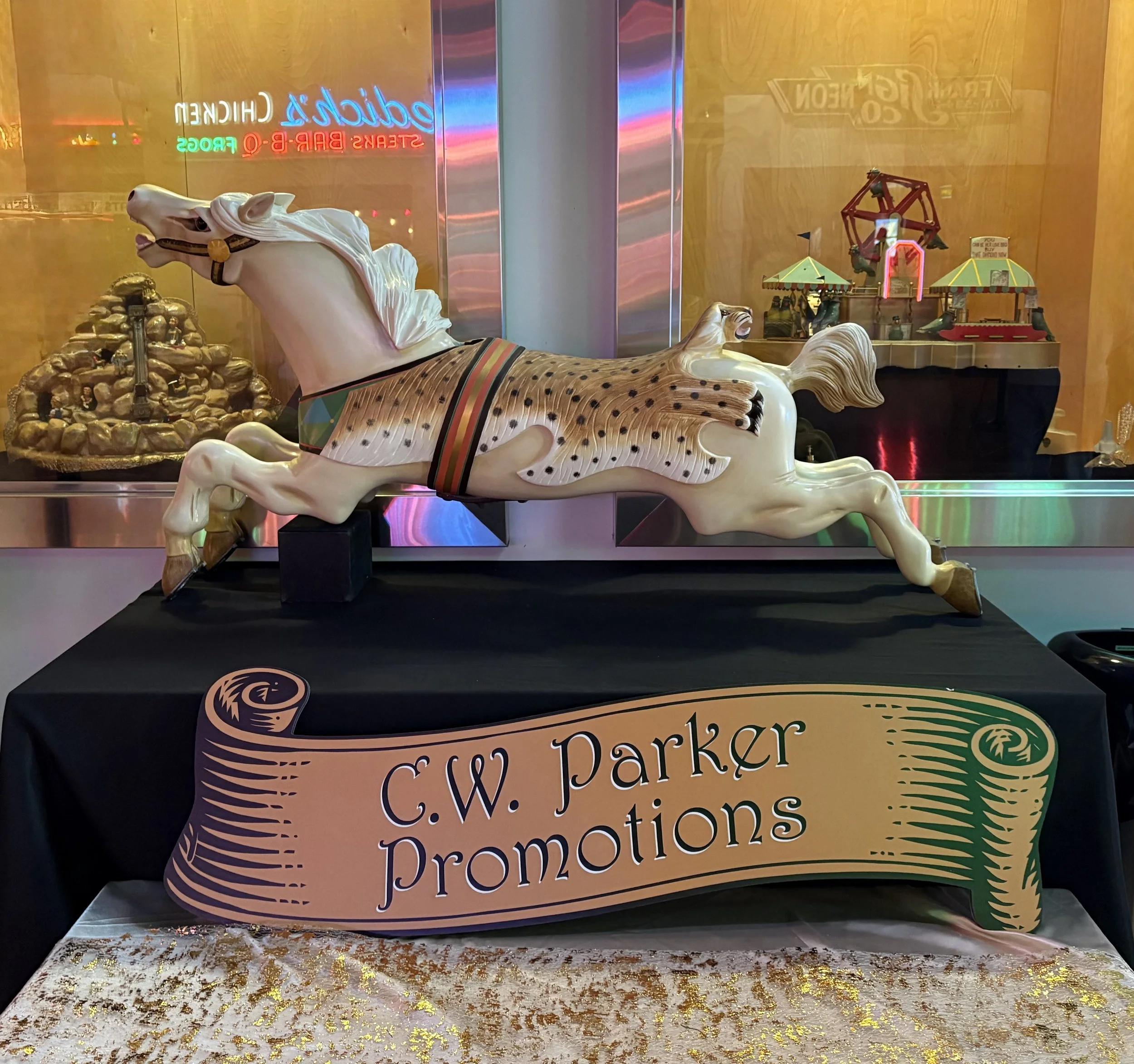
Photo Credit, Mindy Stern
Located in the rain shadow of Mount Hood, the Dalles enjoys a drier climate and more days of sunshine than western Oregon. It’s an outdoor playground for hikers, bikers, kayakers, hunters, fly fishers, windsurfers, and whitewater rafters. There’s lots to do all year round, and fall, with warm days and cool nights, is a perfect time to explore this region’s natural and cultural attractions.
Meanderings is an award-winning travel column by Mercer Island resident, Mindy Stern. For more essays, or to comment, visit her websitewww.mindysternauthor.com